
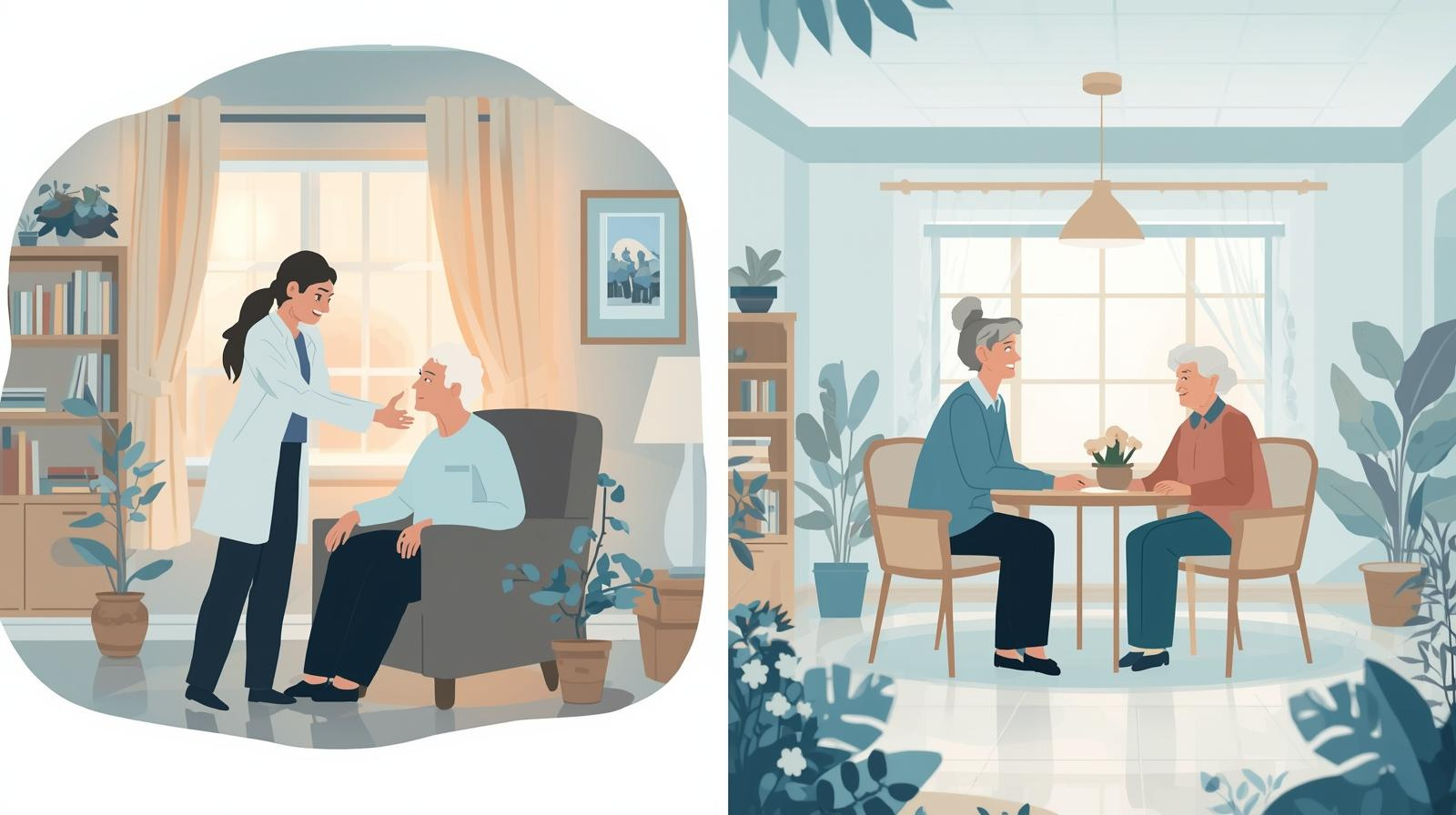
Dementia Care at Home vs Memory Care Home: Complete Guide
SEO Summary: Choosing between dementia care at home and memory care homes is challenging. Moreover, this guide compares care quality, communication methods, behaviour management and security. Furthermore, discover practical solutions and expert advice to make the right choice for your loved one.
Introduction to Dementia Care Options
Choosing the right care for someone with dementia feels overwhelming. Additionally, families often struggle between keeping loved ones at home and moving them to memory care facilities. Therefore, understanding dementia care at home vs memory care homes helps make better decisions.
Currently, around one million people live with dementia in the UK. Consequently, this number will rise to 1.4 million by 2040. Furthermore, the average person spends around £100,000 on dementia care during their lifetime. Hence, choosing suitable care impacts both wellbeing and finances.

This guide explores dementia care at home and memory care options. Moreover, it examines care quality, communication techniques, behaviour management and security measures. Subsequently, you’ll discover practical solutions that work in real life.
Understanding Dementia Care at Home
Dementia care at home means providing support within familiar surroundings. Additionally, this option allows people to stay in their own environment. Furthermore, carers help with daily tasks, medication and personal care.
Home care works well during early dementia stages. Moreover, family members often provide initial support. However, professional carers become necessary as dementia progresses. Therefore, families hire trained caregivers for specific hours or live-in support.
What Home Care Includes
Professional dementia care at home typically provides:
- Help with washing, dressing and personal hygiene
- Medication reminders and management
- Meal preparation and assistance with eating
- Companionship and conversation
- Light housework and laundry
- Support with mobility around the home
Understanding Memory Care Homes
Memory care homes provide specialist residential support for dementia patients. Additionally, these facilities offer round-the-clock supervised care. Furthermore, they feature secure environments designed specifically for memory loss.
Memory care units exist within larger care homes or as standalone facilities. Moreover, staff receive specialist dementia training. Therefore, residents get expert support from experienced professionals.
What Memory Care Homes Provide
Specialist memory care facilities typically include:
- 24-hour professional supervision
- Secure environments preventing wandering
- Structured daily routines and activities
- Specialist dementia care staff
- Medical support is readily available
- Purpose-built dementia-friendly spaces
Care Quality: Dementia Care at Home
Advantages of Home Care Quality
Dementia care at home offers personalised one-to-one attention. Additionally, carers focus solely on one individual. Furthermore, familiar surroundings reduce confusion and anxiety.
People with dementia feel more comfortable at home. Moreover, they maintain connections with neighbours and the community. Therefore, this familiarity supports emotional wellbeing.
Family involvement remains easier with home care. Additionally, relatives visit whenever it suits them. Furthermore, they participate actively in daily care decisions.
Disadvantages of Home Care Quality
Finding skilled dementia carers proves challenging. Moreover, turnover rates create inconsistency in care. Therefore, building trust takes time with each new carer.
Home carers work alone without immediate backup. Additionally, they may lack specialist dementia training. Furthermore, complex medical needs become harder to manage.
Quality depends heavily on individual carers. Moreover, supervision happens less frequently than in facilities. Therefore, ensuring consistent standards requires careful monitoring.
Cost-Effective Solutions for Home Care
Dementia care at home costs approximately £29 per hour in the UK. Additionally, live-in care ranges from £1,200 to £1,800 weekly. Therefore, families should explore funding options.
Practical solutions include:
- Apply for Attendance Allowance (up to £108.55 weekly)
- Request local authority care assessments
- Investigate NHS Continuing Healthcare funding
- Share care responsibilities with family members
- Use respite care for regular breaks
For example, Mrs Thompson from Bristol combines family care with professional support three days weekly. Consequently, her costs were reduced by 40% whilst maintaining quality care.
Care Quality: Memory Care Homes
Advantages of Memory Care Quality
Memory care homes provide specialist trained staff. Additionally, carers understand dementia behaviours deeply. Furthermore, they apply proven techniques developed by experts.
Professional support remains available constantly. Moreover, nurses handle medical emergencies immediately. Therefore, families gain peace of mind regarding safety.
Structured programmes support cognitive function. Additionally, activities encourage social interaction. Furthermore, therapeutic approaches include music and art therapy.
Disadvantages of Memory Care Quality
Memory care feels less personal than home. Moreover, carers support multiple residents simultaneously. Therefore, one-to-one attention happens less frequently.
Moving into care homes causes distress initially. Additionally, unfamiliar environments increase confusion. Furthermore, adjusting to communal living takes time.
Visiting hours may feel restrictive. Moreover, families participate less in daily care. Therefore, some relatives feel disconnected from their loved ones.
Cost-Effective Solutions for Memory Care
Memory care homes cost approximately £1,405 weekly for residential care. Additionally, nursing dementia care averages £1,578 weekly. Therefore, exploring funding becomes essential.
Practical solutions include:
- Check eligibility for local authority funding (assets below £23,250)
- Apply for Funded Nursing Care (£254.06 weekly)
- Investigate Deferred Payment Agreements
- Compare multiple facilities for the best value
- Ask about all-inclusive packages versus additional charges
For instance, the Davies family from Manchester reduced costs using local authority support. Subsequently, they pay only £200 weekly instead of full fees.
Communication: Dementia Care at Home
Advantages of Home Communication
One-to-one conversations happen naturally at home. Additionally, familiar voices and faces reduce anxiety. Furthermore, carers learn individual communication preferences quickly.
Family members understand personal history better. Moreover, they recognise subtle communication cues. Therefore, interpreting needs becomes easier.
Quiet home environments support better understanding. Additionally, background noise stays minimal. Furthermore, people with dementia concentrate more easily.

Disadvantages of Home Communication
Family carers may lack communication training. Moreover, frustration builds during difficult conversations. Therefore, both parties experience stress.
Isolation limits social interaction opportunities. Additionally, fewer people provide conversation variety. Furthermore, communication skills may decline faster.
Carers working alone miss collaborative insights. Moreover, they cannot discuss communication strategies easily. Therefore, problem-solving happens less effectively.
Practical Communication Solutions
Effective techniques for dementia care at home:
- Speak slowly, using simple sentences
- Maintain eye contact, showing genuine interest
- Allow plenty of time for responses
- Ask one question at a time
- Use visual aids and gestures
- Listen actively to feelings, not just words
For example, Mr Patel’s daughter learned validation techniques. Consequently, difficult conversationswere reduced by 60% within three weeks. Additionally, she joined online support groups for advice.
Technology helps communication:
- Video calls connect with distant relatives
- Picture boards aid daily routines
- Voice-activated devices play familiar music
- Reminder apps support medication schedules
Communication: Memory Care Homes
Advantages of Memory Care Communication
Specialist staff receive communication training regularly. Additionally, they understand dementia language changes. Furthermore, they apply person-centred approaches consistently.
Multiple staff members share communication strategies. Moreover, teams discuss what works best. Therefore, approaches improve through collaboration.
Structured activities encourage social interaction. Additionally, group settings provide conversation opportunities. Furthermore, residents connect with peers.
Disadvantages of Memory Care Communication
Staff changes create communication inconsistency. Moreover, new carers must learn preferences repeatedly. Therefore, building rapport takes longer.
Busy environments increase background noise. Additionally, multiple conversations happen simultaneously. Furthermore, this confusion overwhelms some residents.
Communication becomes less personalised. Moreover, staff cannot remember every resident’s history. Therefore, conversations feel more generic.
Practical Communication Solutions
Memory care facilities can improve by:
- Creating detailed communication profiles for each resident
- Training all staff in validation therapy
- Establishing quiet conversation areas
- Using life story books during interactions
- Implementing regular family communication meetings
For instance, Oakwood Care Home introduced memory boxes. Subsequently, meaningful conversations increased by 45%. Additionally, staff understood residents’ backgrounds better.
Behaviour Management: Dementia Care at Home
Advantages of Home Behaviour Support
Familiar environments reduce challenging behaviours. Additionally, established routines continue naturally. Furthermore, triggers remain more controllable.
Carers identify behaviour patterns quickly. Moreover, one-to-one attention allows immediate responses. Therefore, escalation happens less frequently.
Family members understand personal history. Additionally, they recognise early warning signs. Furthermore, they apply calming techniques effectively.

Disadvantages of Home Behaviour Support
Carers may lack behaviour management training. Moreover, aggressive episodes feel frightening when alone. Therefore, safety concerns increase.
Limited resources restrict intervention options. Additionally, specialist support takes longer to access. Furthermore, emergency responses become complicated.
Caregiver stress affects behaviour management. Moreover, exhaustion reduces patience. Therefore, situations escalate more easily.
Practical Behaviour Solutions
Managing challenging behaviours at home:
- Keep daily routines consistent
- Identify and remove triggers
- Ensure adequate pain management
- Provide regular physical activity
- Use calming music during difficult times
- Maintain proper hydration and nutrition
For example, Mrs Wilson’s agitation reduced after establishing set mealtimes. Additionally, afternoon walks prevented sundowning episodes. Consequently, aggressive incidents decreased by 70%.
Safety measures include:
- Remove potential weapons from easy reach
- Create clear exit plans for emergencies
- Keep emergency numbers visible
- Join caregiver support groups for advice
- Arrange respite care for regular breaks
Behaviour Management: Memory Care Homes
Advantages of Memory Care Behaviour Support
Staff receive specialist behaviour management training. Additionally, they understand dementia-related aggression. Furthermore, protocols exist for challenging situations.
Multiple staff members provide backup support. Moreover, teams respond quickly to escalations. Therefore, situations remain safer.
Structured environments minimise behaviour triggers. Additionally, purpose-built spaces reduce confusion. Furthermore, sensory rooms provide calming spaces.
Disadvantages of Memory Care Behaviour Support
Communal living creates additional triggers. Moreover, other residents’ behaviours cause distress. Therefore, challenging situations increase.
Staff cannot prevent all aggressive incidents. Additionally, restraints raise ethical concerns. Furthermore, medication use becomes controversial.
Moving increases behavioural problems initially. Moreover, unfamiliar surroundings cause agitation. Therefore, adjustment periods feel difficult.
Practical Behaviour Solutions
Memory care facilities should implement:
- Regular pain assessments for all residents
- Personalised activity programmes based on interests
- Quiet spaces for calming during agitation
- Staff training in de-escalation techniques
- Music and aromatherapy programmes
For instance, Riverside Memory Care introduced personalised music playlists. Subsequently, aggressive incidents reduced by 55%. Additionally, medication use decreased significantly.
Security: Dementia Care at Home
Advantages of Home Security
Families control security measures completely. Additionally, modifications suit individual needs. Furthermore, technology integrates easily.
Familiar layouts reduce wandering confusion. Moreover, people recognise their own homes. Therefore, attempts to leave decrease.
Family supervision happens frequently. Additionally, neighbours provide additional watchfulness. Furthermore, community support networks develop.
Disadvantages of Home Security
Homes lack purpose-built security features. Moreover, modifications cost significant amounts. Therefore, comprehensive security feels expensive.
Wandering remains a serious risk. Additionally, doors and windows need constant monitoring. Furthermore, preventing exits proves challenging.
Carers cannot watch continuously. Moreover, sleep disruptions affect vigilance. Therefore, nighttime wandering increases risks.
Practical Security Solutions
Making homes safer for dementia care:
- Install deadbolts above eye level
- Use door alarms on all exits
- Place safety gates on stairs
- Remove trip hazards completely
- Ensure adequate lighting throughout
- Consider GPS tracking devices
For example, the Jackson family installed door sensors. Consequently, they received phone alerts when doors opened. Additionally, costs totalled only £150 for complete coverage.
Cost-effective security measures:
- Door knob covers (£5-£10 each)
- Window locks (£3-£8 per window)
- Motion sensor lights (£15-£30)
- Personal GPS trackers (£30-£100)
- Pressure mats (£40-£80)
Security: Memory Care Homes
Advantages of Memory Care Security
Purpose-built security features prevent wandering effectively. Additionally, facilities include alarmed doors. Furthermore, secure gardens allow safe outdoor access.
24-hour supervision ensures constant monitoring. Moreover, staff are trained in wandering prevention. Therefore, missing person incidents rarely occur.
Technology supports comprehensive security. Additionally, wander management systems track movements. Furthermore, video monitoring covers all areas.
Disadvantages of Memory Care Security
Secure environments feel restrictive. Moreover, some residents perceive imprisonment. Therefore, freedom feels limited.
Security measures sometimes fail. Additionally, determined residents find exit methods. Furthermore, emergencies create security challenges.
Balancing security and dignity proves difficult. Moreover, excessive restrictions affect wellbeing. Therefore, ethical concerns arise.
Practical Security Solutions
Memory care facilities can enhance security through:
- Disguising exit doors with murals
- Creating engaging outdoor spaces
- Using colour-coded floors for navigation
- Installing invisible electronic tagging
- Developing wandering accommodation strategies
For instance, Meadowbank Care Home painted exit doors. Subsequently, wandering attempts decreased by 65%. Additionally, residents felt less confined.
Making Your Decision
Choosing between dementia care at home and memory care homes depends on individual circumstances. Additionally, consider these factors carefully:
Choose dementia care at home when:
- Dementia remains in early stages
- Family support is readily available
- Home modifications are achievable
- Budget allows professional carers
- The person strongly prefers staying home
Choose memory care homes when:
- Dementia has progressed significantly
- Wandering creates serious safety risks
- Challenging behaviours need specialist support
- Family caregivers feel overwhelmed
- 24-hour supervision becomes necessary
Remember that circumstances change over time. Moreover, starting with dementia care at home remains possible. Therefore, transitioning to memory care happens when needed.
Conclusion: Finding the Right Dementia Care Path
Deciding between dementia care at home and memory care homes requires careful consideration. Additionally, both options offer distinct advantages. Furthermore, understanding care quality, communication, behaviour support and security helps families choose wisely.
Dementia care at home provides familiar surroundings and personalised attention. Moreover, memory care homes offer specialist expertise and comprehensive security. Therefore, the best choice depends on individual needs and circumstances.
Start by assessing current care requirements. Additionally, consider future progression. Furthermore, explore funding options thoroughly. Consequently, you’ll make informed decisions supporting your loved one’s wellbeing.
Remember that seeking professional advice helps enormously. Moreover, local authority assessments provide valuable guidance. Therefore, contact your GP or social services for support.
Whatever you choose, prioritise dignity, safety and quality of life. Additionally, remain flexible as needs change. Furthermore, trust that you’re making the best decision possible with available information.
“Get trusted advice on dementia care at home and practical tips for caring for someone with dementia at home—all in one place.”