
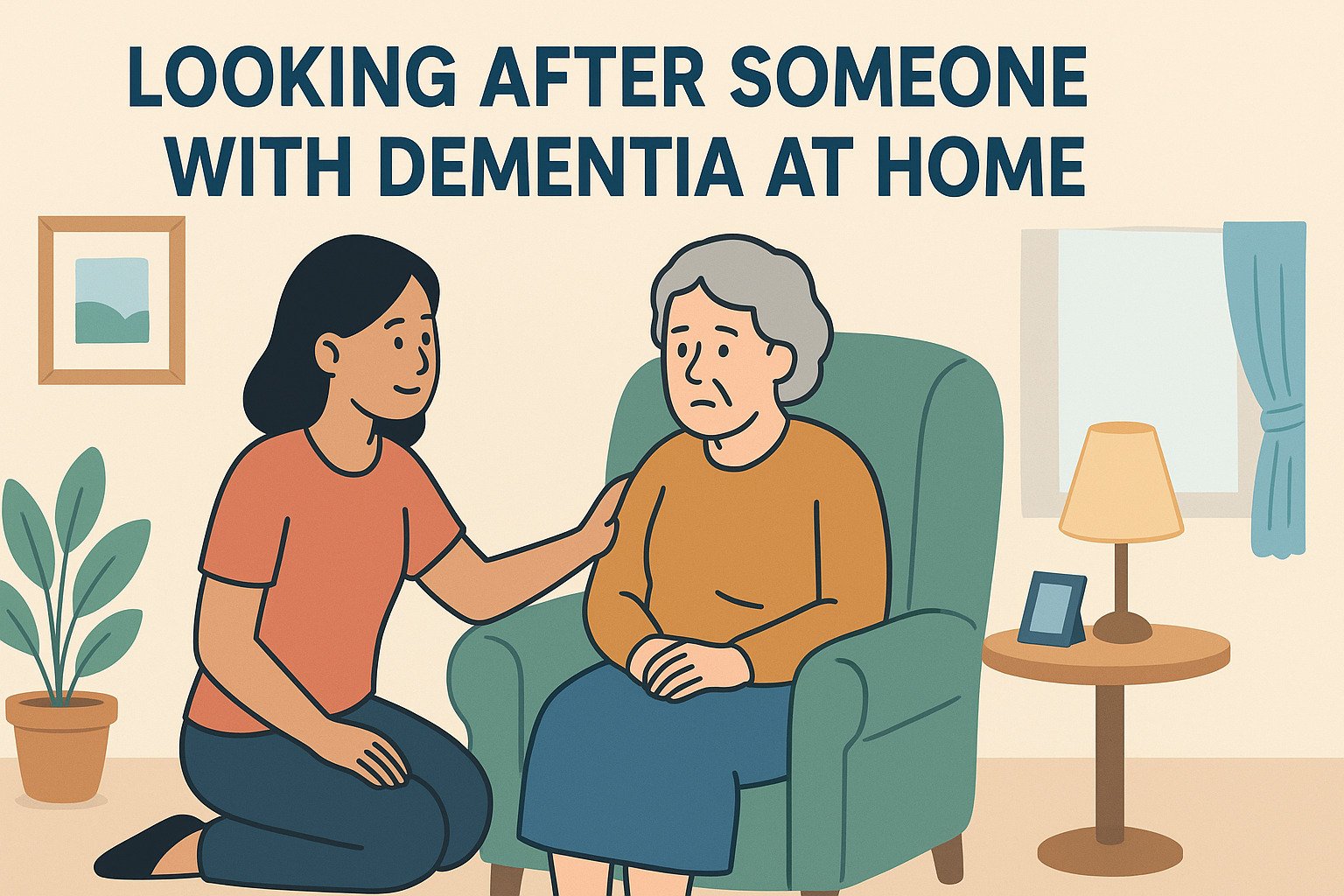
Looking After Someone With Dementia at Home: A Practical Guide for Carers
What You’ll Learn
- Understanding dementia home care
- Creating a safe space
- Daily routines and schedules
- Managing personal care
- Communication tips
- Cost-effective solutions
- Activities and engagement
- Managing challenging behaviours
- Looking after yourself
- Nutrition and mealtimes
- When to get additional help
- Legal and financial planning
Caring for a loved one with dementia at home can feel overwhelming at first. However, with the right knowledge and support, you can create a safe and comfortable environment. Indeed, most people with dementia prefer staying in familiar surroundings. Therefore, looking after someone with dementia at home often provides the best quality of life for both the person and their family.
This guide shares practical tips based on real experiences from carers and healthcare professionals. Moreover, you’ll discover cost-effective solutions that actually work. As a result, you can provide excellent care without breaking the bank.
Understanding Looking After Someone With Dementia at Home

Dementia affects everyone differently. Consequently, your approach needs to be flexible and patient. Furthermore, the person you’re caring for still has feelings, preferences, and dignity. Therefore, always involve them in decisions about their care whenever possible.
Research shows that familiar environments reduce anxiety and confusion. For instance, being surrounded by family photos and favourite items helps people with dementia feel secure. Additionally, staying at home allows them to maintain their independence longer. Thus, home care often delays the need for residential facilities.
Creating a Safe Space for Looking After Someone With Dementia at Home
Simple Safety Improvements That Work
Safety doesn’t require expensive modifications. Instead, focus on these practical changes:
First, remove loose rugs and electrical cords from walkways. Then, install good lighting in all rooms and hallways. Specifically, night lights help prevent falls during bathroom trips. Moreover, mark the edges of steps with bright tape if you have stairs.
Next, lock away cleaning products and medicines. Similarly, remove sharp objects from easy reach. For example, keep knives in locked drawers. Additionally, consider removing knobs from the cooker when not in use. Consequently, you prevent accidents whilst allowing supervised cooking.
Memory Aids Around the Home
Simple labels make a huge difference. For instance, put clear labels on cupboards showing what’s inside. Likewise, place pictures on bathroom and bedroom doors. Furthermore, use large clocks and calendars in the main rooms. Therefore, your loved one can stay oriented to time and place.
Daily Routines When Looking After Someone With Dementia at Home

Why Routines Matter
Consistent daily routines reduce confusion and anxiety. Indeed, knowing what happens next provides comfort. Therefore, try to keep mealtimes, bathing, and bedtime at the same time each day. However, remain flexible when needed.
Sample Daily Schedule for Looking After Someone With Dementia at Home
Here’s a practical routine that works for many families:
Managing Personal Care When Looking After Someone With Dementia at Home
Bathing and Hygiene
Personal care can become challenging. However, patience and dignity are essential. For instance, some people with dementia forget why bathing matters. Therefore, explain each time. Additionally, make the bathroom warm and comfortable. Moreover, use non-slip mats for safety.
Dealing With Toilet Problems
Incontinence often occurs with dementia. Indeed, this can be upsetting for everyone. However, understanding and humour help when appropriate. First, remind your loved one to take regular toilet breaks. Then, make the toilet easy to find. For example, leave the door open with a light on.
Communication Tips for Looking After Someone With Dementia at Home

Communication changes as dementia progresses. Therefore, adapt your approach. First, speak slowly and clearly. Then, use simple sentences with one idea at a time. Moreover, maintain eye contact and smile. Consequently, your loved one feels valued and understood.
Furthermore, avoid arguing about facts. Instead, focus on feelings. For instance, if your mum thinks she needs to collect children from school, don’t say, “Your children are 40 now!” Rather, acknowledge her feelings: “You were always such a caring mum.” Subsequently, redirect to another activity.
Additionally, use positive language. For example, say “Let’s have tea” instead of “Don’t go there.” Similarly, offer choices: “Would you like tea or coffee?” However, limit options to avoid overwhelming them.
Cost-Effective Solutions for Looking After Someone With Dementia at Home
Understanding the Costs
Home care costs vary significantly. However, it’s often cheaper than residential care. For instance, part-time help costs around £15-25 per hour in most areas. Meanwhile, full-time residential care exceeds £3,000 monthly.
Therefore, many families combine personal care with professional support. Specifically, you might hire help for a few hours daily. Consequently, you get essential breaks whilst controlling costs.
Free and Low-Cost Resources
Firstly, contact your local council about carer’s assessments. These are completely free. Additionally, you might qualify for financial support. Furthermore, many areas offer free respite care occasionally.
Budget-Friendly Safety Modifications
You don’t need expensive equipment immediately. Instead, start with simple changes. For example, use bright tape on stairs rather than installing new handrails. Likewise, rearrange furniture to create clear pathways. Furthermore, charity shops sell grab rails and other aids cheaply.
Additionally, ask your GP about equipment loans. Indeed, many NHS trusts lend wheelchairs and commodes free of charge. Therefore, try the equipment before buying.
Activities and Engagement When Looking After Someone With Dementia at Home

Staying active helps maintain abilities longer. However, choose activities they can still enjoy. For instance, someone who loves gardening might enjoy potting plants. Similarly, music lovers appreciate listening to old favourites. Moreover, simple activities work best.
Here are cost-free activities that work well:
Looking at photo albums together sparks memories. Additionally, folding laundry provides a sense of purpose. Furthermore, gentle exercises like seated stretches maintain mobility. Likewise, singing familiar songs brings joy. Moreover, baking simple recipes engages multiple senses.
Managing Challenging Behaviours When Looking After Someone With Dementia at Home

Understanding Wandering
Many people with dementia wander. However, this usually has a reason. For instance, they might feel restless or need to use the toilet. Therefore, try to identify triggers. Additionally, ensure they get exercise during the day. Consequently, evening restlessness often reduces.
Furthermore, consider a simple identity bracelet with your contact details. Moreover, tell neighbours about the situation. Therefore, they can help if your loved one goes out alone.
Dealing With Aggression
Aggressive behaviour can occur suddenly. However, it usually stems from fear or frustration. Therefore, stay calm and speak gently. Moreover, give them space if needed. Additionally, try to identify what caused the upset. Subsequently, you can avoid similar situations.
For example, your dad might resist bathing because the bathroom feels cold. Consequently, warming it first solves the problem. Similarly, he might refuse medication because pills are difficult to swallow. Therefore, ask the GP about liquid alternatives.
Looking After Yourself When Looking After Someone With Dementia at Home

Carer burnout is real and serious. Indeed, you cannot pour from an empty cup. Therefore, self-care isn’t selfish. Moreover, taking breaks makes you a better carer. Consequently, your loved one benefits when you’re rested and healthy.
First, accept help when offered. Then, arrange regular respite care. For instance, even two hours weekly makes a difference. Additionally, maintain friendships and hobbies when possible. Furthermore, eat properly and exercise. Otherwise, your own health suffers.
Moreover, join a carers’ support group. Indeed, talking with others who understand helps enormously. Similarly, don’t hesitate to see your own GP if you feel overwhelmed. Therefore, you get support before reaching the crisis point.
Nutrition and Mealtimes When Looking After Someone With Dementia at Home
Good nutrition supports overall health. However, eating problems often develop. For instance, some people forget they’ve eaten. Conversely, others forget to eat entirely. Therefore, regular mealtimes help establish patterns.
Additionally, serve simple, familiar foods. Moreover, use bright-coloured plates against contrasting tablecloths. Consequently, food becomes easier to see. Furthermore, offer finger foods if cutlery becomes difficult. For example, sandwiches, cheese cubes, and fruit pieces work well.
Meanwhile, ensure adequate hydration. Indeed, dehydration worsens confusion. Therefore, offer drinks regularly throughout the day. Similarly, foods with high water content help. Consequently, soups and fruits serve double duty.
When to Consider Additional Help for Looking After Someone With Dementia at Home
Home care works brilliantly for many families. However, recognise when you need more support. For instance, if your loved one requires constant supervision, consider professional help. Similarly, if aggressive behaviour becomes dangerous, seek specialist advice.
Additionally, watch for signs of carer burnout. Specifically, if you feel constantly exhausted or resentful, get help immediately. Moreover, physical health problems in carers signal overload. Therefore, don’t wait until you collapse.
Furthermore, day centres provide excellent middle-ground solutions. Indeed, your loved one gets social interaction and activities. Meanwhile, you gain essential respite. Consequently, home care remains sustainable longer.
Legal and Financial Planning When Looking After Someone With Dementia at Home
Early planning prevents future stress. Therefore, discuss legal matters whilst your loved one can participate. Specifically, consider a lasting power of attorney for health and finances. Additionally, update wills if needed. Moreover, organise important documents in one accessible place.
Furthermore, check benefit entitlements. Indeed, many people miss out on financial support. For instance, Attendance Allowance helps with care costs. Similarly, Carer’s Allowance supports family carers. Therefore, research what’s available in your situation.
Final Thoughts on Looking After Someone With Dementia at Home
Looking after someone with dementia at home presents challenges. However, it also brings rewards. Indeed, many carers describe feeling closer to their loved ones. Moreover, knowing you’ve provided dignified care in familiar surroundings brings peace.
Remember, you’re not alone on this journey. Furthermore, resources and support exist when you need them. Therefore, reach out to healthcare professionals, charities, and other carers. Additionally, be kind to yourself. Indeed, you’re doing something remarkable.
Finally, take each day as it comes. Consequently, you avoid feeling overwhelmed. Moreover, celebrate small victories along the way. Most importantly, the love and care you provide make an enormous difference. Therefore, trust yourself and keep going. Looking after someone with dementia at home is challenging, but with patience, support, and practical strategies, you can create a safe and loving environment where your loved one can thrive.
“Get trusted advice on dementia care at home and practical tips for caring for someone with dementia at home—all in one place.”