
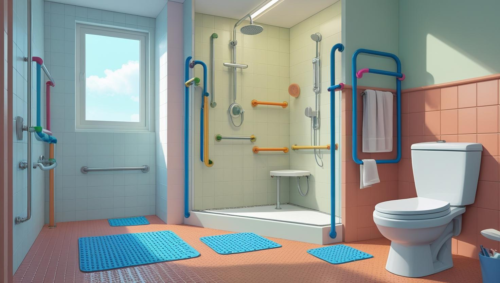
Quick summary: A dementia friendly bathroom uses good lighting, non slip flooring, grab bars and clear colour contrast to lower the risk of falls. Many changes cost under thirty pounds. This guide walks through each step in plain language, with real examples and prices, so you can start today.
The bathroom is often the most dangerous room in the house for someone with dementia. Wet floors, confusing mirrors and hard to reach taps all add up. As a result, families often feel unsure where to start. This guide breaks down how to build a dementia friendly bathroom using simple, affordable changes that make a real difference to safety and daily comfort.
Why the Dementia Friendly Bathroom Needs Special Care
Dementia affects memory, balance and the ability to judge distance and depth. Because of this, everyday bathroom tasks become harder over time. A person may struggle to work out where the toilet is or how to turn on a tap. In addition, wet surfaces raise the chance of a fall.
According to the Alzheimer’s Society, falls are one of the most common reasons people with dementia end up in hospital. Meanwhile, the NHS notes that home adaptations can significantly cut this risk. This means that small, thoughtful changes to a dementia friendly bathroom can protect health and independence at the same time.

Dementia Friendly Bathroom: Low Cost Safety Changes You Can Make Today
Not every change needs a builder. Several of the most useful updates cost very little and can be done in an afternoon.
Remove Trip Hazards
Loose bath mats and rugs are a leading cause of falls. Therefore, the first step is often the cheapest. Simply take up any loose mats and replace them with a fixed, non slip mat. A good rubber bath mat costs around ten to fifteen pounds and grips the floor firmly, even when wet.
Add Grab Bars
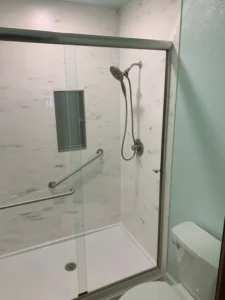
Grab bars near the toilet, shower and bath give something sturdy to hold onto. Professionally fitted bars typically cost between thirty and eighty pounds each, depending on length and material. Choose a colour that stands out against the wall. This helps the bars catch the eye quickly, which matters more as dementia progresses.
Improve the Lighting
Poor lighting causes confusion and hides hazards. A motion sensor night light costs around ten pounds and switches on automatically when someone walks in. This is especially useful for night time trips to the toilet, when falls are most likely. Where possible, swap flickering bulbs for steady LED lighting throughout the room.
Use Colour Contrast
People with dementia often struggle to tell similar colours apart. For example, a white toilet against a white wall can be almost invisible to someone with the condition. A coloured toilet seat, which costs roughly 15 to 25 pounds/dollers, solves this instantly. Similarly, a dark bath mat on a light floor helps define the edges of the bath clearly.
Flooring Choices for a Dementia Friendly Bathroom
Flooring plays a bigger role in safety than most people expect. Smooth tiles look attractive but become dangerous once wet. Textured vinyl or rubber flooring offers far better grip and is not much more expensive than standard flooring when fitted during a renovation.
If a full floor change is not possible right now, non slip adhesive strips are a practical short term fix. These stick directly onto existing tiles and cost only a few pounds per pack. They are simple enough to fit without professional help, which makes them a sensible first step for many families.
Making the Shower and Bath Safer
Bathing is often one of the most stressful parts of the day for both the person with dementia and their carer. A few adjustments can ease this considerably.
Walk In Showers and Shower Seats
A walk in shower removes the need to step over a high edge, which lowers the risk of a fall. Where a full renovation is not affordable, a simple shower seat is a strong alternative. These start from around twenty pounds and give a stable place to sit while washing.
Handheld Showerheads
A handheld showerhead allows more control during washing and works well alongside a shower seat. It also makes hair washing far easier for a carer to manage safely.
Water Temperature Control
Dementia can affect a person’s ability to judge hot and cold water. As a result, scalding becomes a real risk. Fitting a thermostatic mixing valve keeps water at a steady, safe temperature. Many plumbers can fit one during a routine bathroom check, often for a modest fee.
More Practical Solutions for a Dementia Friendly Bathroom

Beyond the basics, a few extra details can turn a good bathroom into a truly dementia friendly bathroom. These details often go unnoticed until they cause a problem, so it helps to plan for them early rather than waiting for an accident.
Storage Solutions for a Dementia Friendly Bathroom
Cluttered cupboards confuse anyone, but they cause particular trouble in a dementia friendly bathroom. Keep only the items used daily on open shelves at eye level. Digging through a cupboard adds an extra step, which can lead to frustration or a missed item. Clear plastic containers, labelled with a picture or a simple word, help someone find soap, toothpaste or a flannel without asking for help. In addition, storing spare items such as toilet roll and towels in a separate cupboard keeps the main space calm and uncluttered.
Choosing Taps for a Dementia Friendly Bathroom
Traditional taps with two separate handles often confuse people with dementia, since it is not always clear which one controls hot and which controls cold. Lever taps, which turn with a single motion, are far easier to operate. Colour coded markers, red for hot and blue for cold, add a further layer of clarity. Many plumbers can swap standard taps for lever taps in under an hour, and the fittings themselves often cost less than fifty pounds.
Doors and Locks
A locked bathroom door can trap someone with dementia inside during a moment of confusion, which can quickly become frightening for them. Where possible, replace standard locks with ones that can be opened from both sides in an emergency. A simple bolt that a carer can release from outside offers peace of mind, while still allowing some everyday privacy.
Toilet Roll Holders and Dispensers
Small details like the position of a toilet roll holder matter more than they seem. Placing it within easy reach of the toilet, rather than behind or beside it, reduces the need to twist or stretch awkwardly. Pump action soap dispensers are also easier to use than traditional bars of soap, since they need only one simple action rather than fine motor control.
Heating and Ventilation
A cold bathroom can be uncomfortable and even distressing for someone with dementia, especially during the winter months. Some dementia patients often feel cold, regardless of the weather. Installing a small, wall-mounted heater with a timer can keep the room warm without requiring constant remembering or adjustments. Good ventilation also matters, since a steamy room can fog mirrors and glass, making it harder to see clearly. A simple extractor fan, often already fitted in most bathrooms, should be checked regularly to make sure it still works well.
Bath and Shower Additions
A long handled sponge or brush allows more independence during washing, since it removes the need to bend or stretch into hard to reach areas. Non slip stickers placed inside the bath itself, rather than only on the floor outside it, add an extra layer of grip exactly where it is needed most. Together, these small additions build on the core safety features already covered and help a dementia friendly bathroom work well for everyday use.
Why should we not use locks in a dementia friendly bathroom?
Locks can trap someone with dementia inside during a moment of confusion, and this often causes real fear and distress. A person may forget how the lock works or struggle to turn it the right way. As a result, they can become stuck without knowing how to ask for help. This is especially risky if they fall or feel unwell while alone in the house. Instead of a standard lock, a simple bolt that a carer can release from outside offers safety without removing this danger. Some families choose no lock at all, particularly once dementia reaches a later stage. This allows a carer to check on the person quickly if something feels wrong.
This ties in with the “Doors and Locks” point earlier in the post, so the two sections now reinforce each other rather than repeating the same content twice.
Keeping the Bathroom Calm and Familiar
Beyond physical safety, the feel of the room matters too. A calm bathroom helps reduce anxiety and resistance to washing.
Keep the layout consistent and avoid moving furniture or products around. Familiar towels, a favourite soap or a well loved dressing gown can bring comfort. At the same time, try to reduce clutter, since too many objects can overwhelm someone with dementia.
Simple picture signs on the door or near the sink can also help. A laminated sign showing a toilet or a tap costs almost nothing to make, yet it can support independence for much longer.
Dementia Friendly Bathroom: When to Bring in a Professional

Some changes are best handled by an occupational therapist or a qualified tradesperson. An occupational therapist can visit the home, assess specific needs and recommend equipment suited to the person’s stage of dementia. In many areas, this assessment is free through local health or social care services.
For bigger jobs, such as installing a walk in shower or widening a doorway, always use a qualified professional. This keeps the family safe and ensures the work meets proper building standards.
Conclusion
Building a dementia friendly bathroom does not require a full renovation or a large budget. Small, low cost steps such as better lighting, grab bars and colour contrast can lower the risk of falls significantly. Start with the cheapest and simplest changes first, then build up over time as needs change. With thoughtful planning, a dementia friendly bathroom can offer safety, dignity and comfort for years to come.
Frequently Asked Questions
What makes a bathroom dementia friendly?
A dementia friendly bathroom uses clear colour contrast, non slip flooring, good lighting and grab bars. Together, these features reduce confusion and lower the risk of falls. The goal is to make each item easy to see, easy to reach and simple to use without help.
How much does it cost to make a bathroom dementia friendly?
Many changes, such as non slip mats, night lights and coloured toilet seats, cost under thirty pounds each. Larger changes, like a walk in shower, cost more but can often be supported by local grants or health services. As a result, most families can make meaningful progress in stages rather than all at once.
What colour is best for a dementia friendly bathroom?
Strong, contrasting colours work best. For example, a dark toilet seat against a light wall or a coloured grab bar against plain tiles helps items stand out clearly. Avoid patterned tiles or flooring, since busy patterns can look confusing or even appear to move.
Are mirrors a problem in a dementia friendly bathroom?
Yes, mirrors can sometimes cause confusion or distress if a person does not recognise their own reflection. This is known as mirror misidentification and tends to appear in later stages of dementia. Covering the mirror with a curtain or removable film is often enough to ease this without a full renovation.
Can I get help paying for bathroom changes?
In some countries, including the UK, government grants or local council support may help cover larger adaptations. It is worth speaking to a social worker or occupational therapist about what support is available in your area, since eligibility rules vary by region.
Should I ask a professional before making changes?
For small changes like mats or night lights, no professional help is needed. For grab bars, walk in showers or plumbing work, it is best to use a qualified tradesperson or consult an occupational therapist first. This ensures the work is fitted safely and meets local building standards.
How do I make a small bathroom dementia friendly?
Focus on the changes that matter most in a tight space. A fold down shower seat, a single well placed grab bar and a bright motion sensor light often make the biggest difference. Keeping the floor clear of clutter also helps, since a small room leaves less room for error around obstacles.
What flooring is safest for someone with dementia?
Textured vinyl or rubber flooring offers good grip, even when wet, and is far safer than smooth tiles. If a full floor change is not possible right now, non slip adhesive strips are a low cost short term option that can be fitted without a professional.
How can I make night time bathroom trips safer?
Night time falls are common, since darkness adds to existing confusion. A motion sensor light near the bed and another inside the bathroom help guide the way automatically. A clear, short path from bed to toilet, free of rugs or furniture, also reduces the risk considerably.
Should taps and toilets be labelled?
Yes, simple labels or picture signs can support independence for longer. A laminated picture of a toilet on the door, or a coloured sticker on the hot tap, gives a clear visual cue. This is especially useful once written words become harder to process.
Does the stage of dementia change what the bathroom needs?
Yes, needs shift as dementia progresses. In earlier stages, labels, better lighting and grab bars often provide enough support. In later stages, a person may need full assistance with washing, so a walk in shower, a shower seat and non slip flooring become more important.
What products help with incontinence in a dementia friendly bathroom?
Absorbent pads, waterproof mattress covers and an easy to reach toilet all help manage incontinence with dignity. A raised toilet seat can also make sitting down and standing up easier, which reduces both discomfort and the risk of a fall.
Can I make these changes if I rent my home?
Many low cost changes, such as mats, night lights, coloured toilet seats and picture signs, do not require permission from a landlord. For fixed changes like grab bars, it is worth asking the landlord first, since some will agree once they understand the safety reason behind the request.
Where should I start if the budget is limited?
Begin with the cheapest, highest impact changes first. Removing loose rugs, adding a night light and fitting a non slip bath mat cost very little and can be done in a single afternoon. From there, build up to grab bars and flooring as budget allows.
“Get trusted advice on dementia care at home and practical tips for looking after someone with dementia at home—all in one place.”