
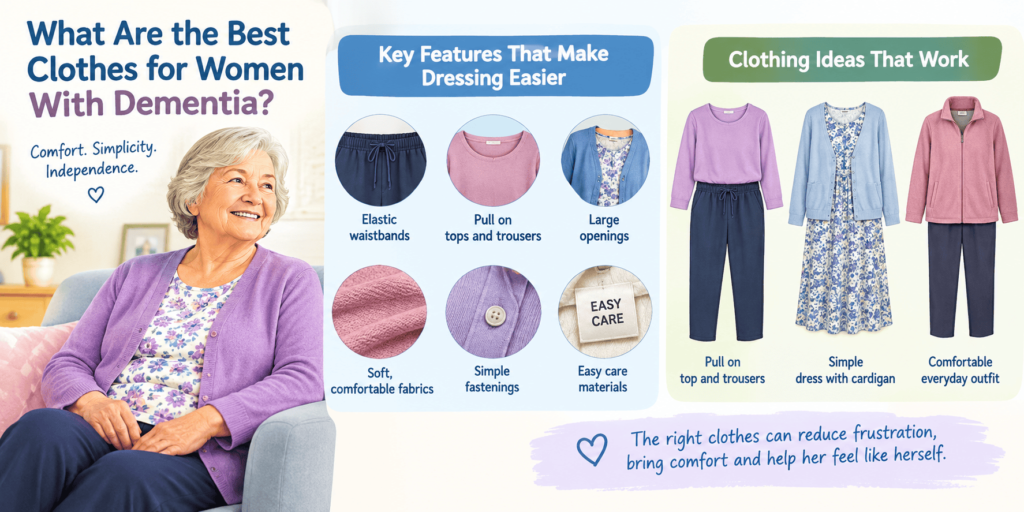
What Are the Best Clothes for Women With Dementia?
Quick answer: The best clothes for women with dementia are soft, simple and easy to put on. Look for elastic waistbands, pull on tops and trousers, and large openings. These features reduce frustration for both the woman and her carer, while still allowing her to look and feel like herself. Adaptive clothing, easy wear clothing for the elderly with dementia, and familiar everyday outfits can all work well, depending on her stage of dementia and how much support she needs.
I have cared for people with dementia for over ten years. In that time, I have dressed women on good mornings and on very hard mornings. I have learned that clothing choices can either calm a difficult moment or make it worse. This guide shares what actually works, based on real experience, not just theory.
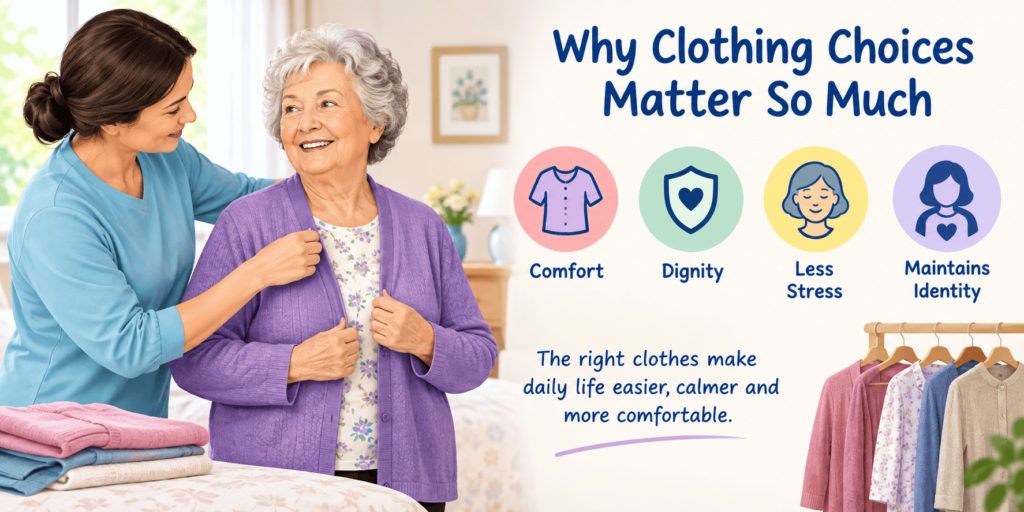
Why Clothing Choices Matter So Much
Dressing seems simple until dementia changes how a person thinks and moves. Many women with dementia struggle with buttons, zips and small fasteners. Some forget the steps involved in getting dressed. Others feel scared or confused when someone touches their arms or head during dressing.
Because of this, the best clothes for women with dementia are not just about looks. They are about comfort, dignity and reducing daily stress. Good clothing for the elderly can turn a stressful ten minutes into a calm routine. It also protects the woman’s sense of identity, which matters just as much as practicality.
What Makes Good Clothing for Women With Dementia
Good dementia clothing should always put comfort first. However, it should never feel medical or babyish, since this can affect her confidence and mood.
Here is what to look for when choosing clothing for the elderly with dementia.
1. Soft fabrics such as cotton, which feel gentle against sensitive skin
2. Loose, relaxed cuts that allow easy movement
3. Elastic waistbands instead of belts or stiff waist fastenings
4. Wide neck and arm openings for easier dressing
5. Simple, familiar styles that match her usual taste
In addition, always think about temperature. Layering works well, since it allows quick adjustments as the day warms up or cools down.
Easy Wear Clothing for the Elderly With Dementia
Easy wear clothing for the elderly with dementia is designed to remove unnecessary steps from dressing. Pull on trousers, for example, are far easier to manage than trousers with buttons and zips. Similarly, wrap tops and stretch dresses reduce the number of movements needed.
A cost effective option is to buy plain elastic waist trousers from a regular supermarket clothing range, rather than a specialist retailer. These often cost a fraction of branded adaptive ranges and work just as well for many women in the early and middle stages of dementia. Sewing a small strip of soft elastic into the waistband of her favourite existing trousers is another low cost fix, and it keeps her in clothes she already loves.
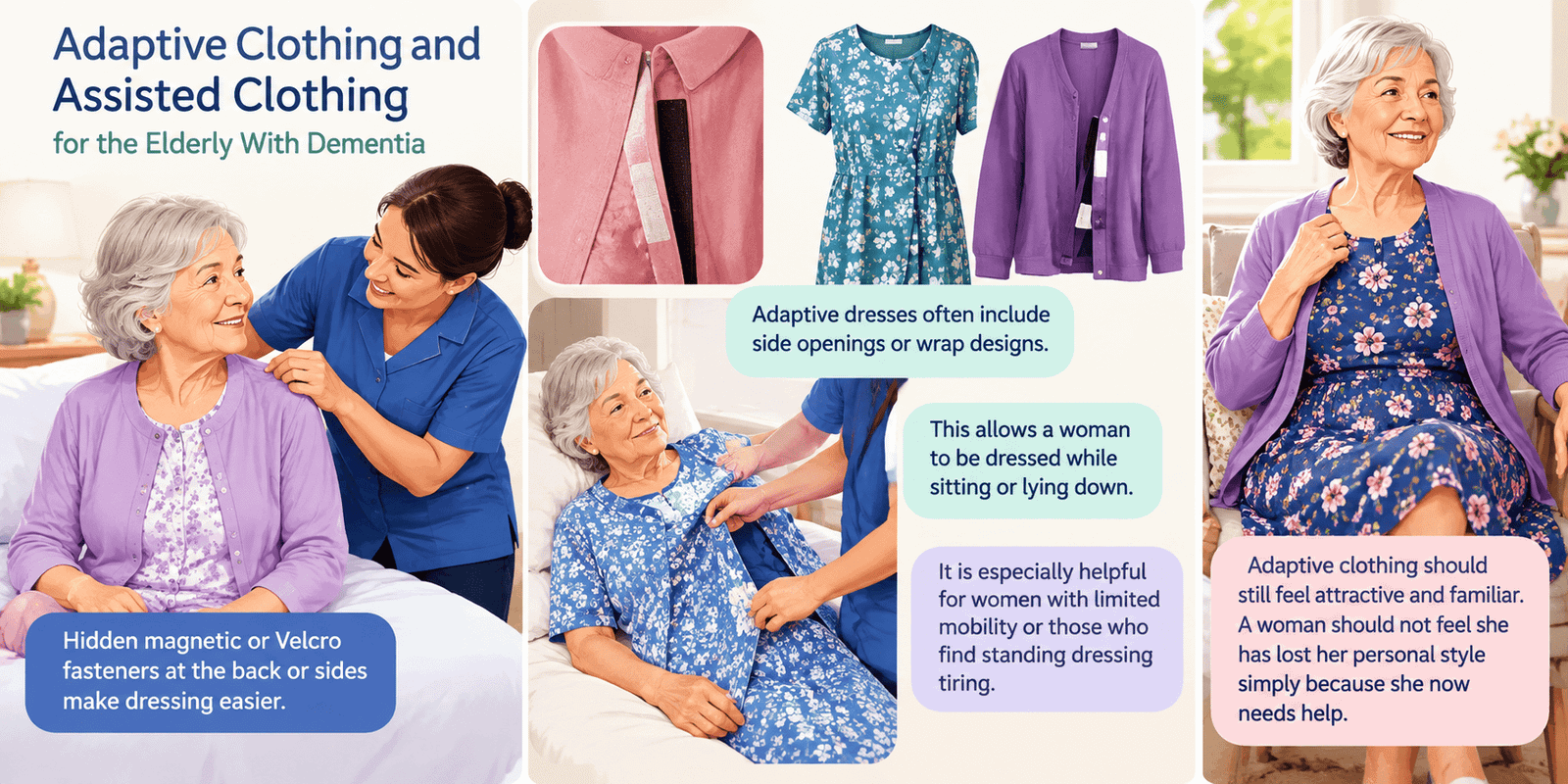
Adaptive Clothing and Assisted Clothing for the Elderly With Dementia
Assisted clothing for the elderly with dementia becomes more useful as dementia progresses and daily support increases. This type of alzheimers clothing often includes hidden magnetic or Velcro fasteners at the back or sides. As a result, a carer can dress the person with far less lifting and turning.
Adaptive dresses are a good example. Many now include side openings or wrap designs, so a woman can be dressed while sitting or lying down. This is especially helpful for women with limited mobility or those who find standing dressing tiring.
That said, adaptive clothing should still feel attractive and familiar. A woman should not feel she has lost her personal style simply because she now needs help.
Common Frustrations Carers Report With Dementia Clothing
Real experience matters here, and it is worth being honest about the problems too. Many carers say that sleeves on adaptive dresses often run too short, especially for women with longer arms. Others report that fasteners, particularly cheaper Velcro strips, wear out quickly after repeated washing.
Family carers also commonly mention that specialist adaptive ranges are expensive, and that sizing between brands is inconsistent. Because of this, many carers try a small number of pieces first, rather than buying a full wardrobe at once. This avoids wasted money if a design does not suit her.
Finally, some carers say too many outfit choices cause visible distress. Laying out two options, rather than opening a full wardrobe, tends to work much better in practice.
Clothes for Women With Dementia and Incontinence
Clothing needs often change when incontinence becomes part of daily care. Quick access matters here more than anything else. Elastic waist trousers or wrap skirts allow fast changes, which helps protect her dignity during an accident.
Washable, durable fabrics are essential, since these clothes will be laundered often. It also helps to keep two or three spare outfits ready at all times, so a change never causes delay or stress.
Best Nightwear for Women With Dementia
Nightwear should follow the same rules as daytime dementia clothing. Soft, breathable fabric reduces irritation, and loose fitting designs allow comfortable movement through the night.
Familiar pyjamas often work better than unfamiliar adaptive nightwear, especially in the earlier stages. However, as care needs increase, front opening nightdresses can make overnight changes far easier for a carer, without needing to fully undress her.
Anti Strip Clothing for Women With Dementia
Some women repeatedly remove their clothes, which can be distressing for families. Before choosing anti strip clothing, it helps to consider why this is happening. Common reasons include feeling too hot, needing the toilet, skin irritation, or general discomfort.
If these causes have been ruled out, anti strip designs, such as back fastening bodysuits, can help. Even so, comfort and dignity should always come first, and these garments should never be used simply for convenience.
How to Make Dressing Easier Day to Day
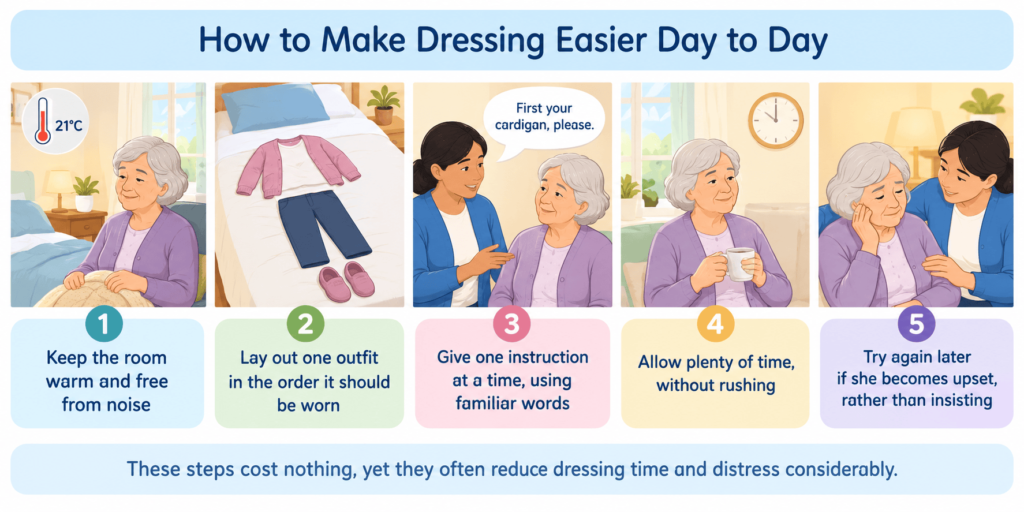
A calm approach makes a bigger difference than any single item of clothing. Try these simple steps during dressing.
1. Keep the room warm and free from noise
2. Lay out one outfit in the order it should be worn
3. Give one instruction at a time, using familiar words
4. Allow plenty of time, without rushing
5. Try again later if she becomes upset, rather than insisting
These steps cost nothing, yet they often reduce dressing time and distress considerably.
Choosing Clothes Based on Dementia Stage
Clothing needs shift as dementia progresses. In the early stages, most women can still choose and manage their own clothes with light reminders. In the middle stages, easy wear clothing for the elderly with dementia becomes more useful, particularly pull on styles.
In later stages, comfort and ease of care usually matter more than style alone. For women who are bedbound, clothing with full length back or side openings makes changing far gentler and quicker.
Building a Simple Dementia Wardrobe on a Budget
You do not need an expensive specialist wardrobe to dress a woman with dementia well. Start small, with two or three comfortable tops, a few pull on trousers, and one adaptive dress if needed.
Charity shops and supermarket ranges often stock soft, simple clothing at low prices. Meanwhile, keeping the wardrobe small, rather than full, actually makes daily choices easier for her, not harder.
Frequently Asked Questions
What are the best clothes for women with dementia?
The best clothes for women with dementia are soft, simple, and easy to remove. Elastic waistbands, pull on tops, and familiar styles work particularly well for most women.
Is adaptive clothing worth the cost?
Adaptive clothing can be worth it for women who need extra support with dressing or personal care. However, many families find that a few adapted pieces, combined with everyday easy wear clothing, work just as well at a lower cost.
Can I adapt clothes she already owns?
Yes. Sewing in elastic, replacing small buttons with larger ones, or adding Velcro to an existing garment is a simple, low cost way to adapt her favourite clothes.
What should I avoid buying?
Avoid small buttons, complicated zips, scratchy fabric, and very tight clothing. These often cause frustration and can make dressing take much longer.
How do I stop her from removing her clothes?
First, check for discomfort, heat, or a need to use the toilet. If these are not the cause, anti strip clothing may help, but comfort and dignity should always come first.
How many outfits does she really need?
A small, simple wardrobe usually works best. Too many choices can cause confusion, so two or three reliable outfits are often more practical than a full closet.
Is adaptive clothing for women with dementia worth it?
It tends to be worth it once dressing becomes difficult or distressing for either of you. If she still dresses independently with ease, ordinary clothes may still be enough for now.
Can I make adaptive clothing for women with dementia myself?
Yes. Many changes can be made at home, such as sewing in elastic, swapping small buttons for larger ones, or attaching iron on Velcro strips to existing clothes.
How does adaptive clothing for women with dementia compare with traditional clothing?
Traditional clothing usually needs more fine motor skills and patience during dressing. Adaptive clothing removes some of these steps, which often makes mornings calmer as dementia progresses.
What are the signs you need adaptive clothing for women with dementia?
Watch for growing frustration with buttons or zips, dressing taking much longer, resistance to help, or reduced arm and hand movement during the day.
How often should you update adaptive clothing for women with dementia?
There is no fixed schedule to follow. Reassess her wardrobe whenever dressing becomes harder, her needs change, or existing pieces wear out or no longer fit well.
What mistakes should you avoid with adaptive clothing for women with dementia?
Avoid buying a full wardrobe before testing one piece, ignoring her usual style, and assuming sizing is the same across different adaptive brands.
What is the worst adaptive clothing for women with dementia?
The least suitable options are stiff fabrics, overly complicated wrap designs, and anything that looks obviously medical, since this can affect her confidence.
What are the pros and cons of adaptive clothing for women with dementia?
The main benefits are easier dressing, more independence, and a calmer daily routine. The drawbacks are higher prices, narrower style choice, and some designs feeling impersonal.
How much does adaptive clothing for women with dementia cost?
Basic easy wear pieces, such as pull on trousers, usually cost about the same as standard high street clothing. Specialist adaptive dresses and nightwear tend to cost more, since extra design work goes into the fastenings.
What are cheap adaptive clothing options for women with dementia?
Supermarket elastic waist ranges, charity shops, and simple home adaptations such as sewn in elastic or Velcro are the most affordable routes, often costing far less than specialist adaptive brands.
Final Thoughts
The best clothes for women with dementia are not the most expensive or the most specialised. They are the clothes that support comfort, dignity and independence, while still feeling like her. Whether you choose adaptive clothing, easy wear clothing for the elderly with dementia, or simply adapted favourites from her existing wardrobe, the goal stays the same. Good dementia clothing should make daily life calmer for her, and easier for you.
“Get trusted advice on dementia care at home and practical tips for looking after someone with dementia at home-all in one place.”