
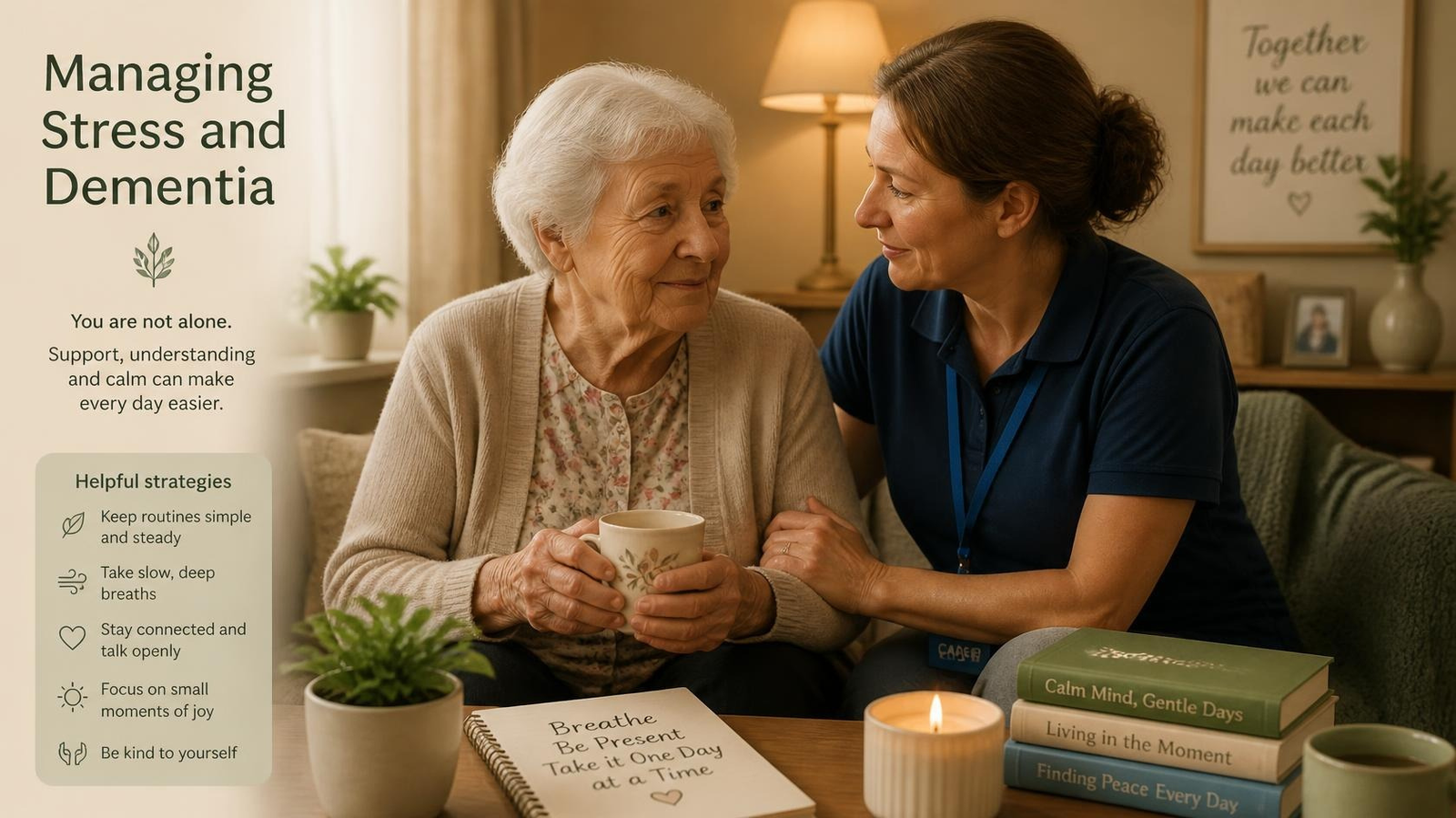
Quick Answer. Yes, ongoing stress can make dementia worse. It raises a hormone called cortisol, which harms the brain over time. However, stress alone does not cause dementia. It is one of several risk factors that can speed up decline, and it is also one of the few factors a person can actively manage. This guide explains how stress affects the brain, how to tell stress apart from dementia, and simple, low cost ways to bring stress levels down.
Does Stress Make Dementia Worse? Understanding the Link
So, does stress make dementia worse? The short answer is yes, in most cases. When someone feels stressed for weeks or months, their body keeps producing cortisol. This hormone is useful in short bursts. It helps the body deal with danger. But when cortisol stays high for a long time, it starts to damage a part of the brain called the hippocampus. The hippocampus stores memories. Therefore, when it is damaged, memory and thinking often get worse.

Research also links high stress to inflammation in the brain. Inflammation can speed up the build up of harmful proteins linked to Alzheimer’s disease. As a result, people who live with constant stress may see their symptoms progress faster than those who manage stress well. [Alzheimer’s Society](https://www.alzheimers.org.uk/blog/can-stress-cause-dementia) covers this cortisol link in more detail.
Can Stress Cause Dementia?
This is a slightly different question, and the answer is more careful. Stress on its own does not directly cause dementia in most people. Instead, long term stress is one of several risk factors that can raise the chance of developing it. For example, one large study found that people who lived through two or more major stressful events had a much higher risk of dementia later in life. Other research has linked post traumatic stress disorder with almost double the usual risk.
So, stress is best seen as a piece of the puzzle. Genetics, age, heart health, and lifestyle all play a part too. Still, stress is one of the few pieces a person can actually work on. The [NHS](https://www.nhs.uk/every-mind-matters/mental-health-issues/stress/) has further guidance on recognising and managing everyday stress.
Can Stress Be Mistaken for Dementia?
Yes, and this happens more often than people think. The condition is sometimes called pseudodementia. It usually comes from severe stress, anxiety, or depression rather than brain disease. Someone under heavy pressure may forget appointments, lose focus, or struggle to follow conversations. These signs can look a lot like early dementia.
The good news is that pseudodementia is often reversible. Once the underlying stress or depression is treated, thinking usually improves. This is why a proper medical assessment matters. A doctor can rule out treatable causes before assuming dementia is the reason for memory changes.
What is the impact of stress on the brain?
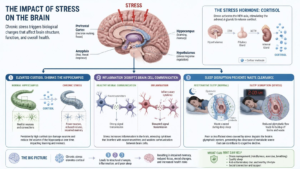
In addition, stress often leads to poor habits such as skipping meals, drinking more alcohol, or avoiding exercise. Each of these habits adds further strain on the brain. Together, these effects explain why so many experts ask whether stress makes dementia worse, and why the answer leans firmly toward yes.
What Are the Symptoms of Chronic Stress?
Chronic stress builds slowly, so the signs are easy to miss at first. Common symptoms include the following.
- Feeling tired even after a full night of sleep
- Constant worry over small things
- Trouble concentrating or finishing simple tasks
- Irritability or a short temper
- Headaches, muscle tension, or an upset stomach
- Trouble sleeping or waking up often during the night
- Withdrawing from friends or family
If three or more of these signs last for several weeks, it is worth taking action.
What Are Signs Your Body Is Shutting Down From Stress?
When stress becomes severe or goes untreated for a long time, the body can start to show serious warning signs. These include a racing heart, chest tightness, panic attacks, extreme exhaustion, and a weakened immune system that leads to frequent illness. Some people also notice missed periods, sudden weight change, or a total loss of motivation.
These signs mean the body is under real strain. Anyone noticing several of them together should speak to a doctor soon, rather than waiting for things to improve on their own.
Can Anxiety Cause Dementia?
Anxiety and stress are closely linked, so this question comes up often. Current research suggests that long term anxiety may raise dementia risk, largely because it keeps the stress response switched on for years at a time. Anxiety also often leads to poor sleep and lower activity levels, both of which are separately linked to cognitive decline.
However, having anxiety does not mean dementia is certain. Many people live with anxiety and never develop dementia. Treating anxiety early, through therapy or lifestyle changes, appears to lower the added risk.
How to Reverse Memory Loss From Stress
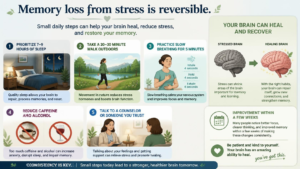
Memory loss caused by stress alone is often reversible, unlike memory loss from dementia. The brain has a strong ability to recover once stress levels drop. Helpful steps include the following.
- Prioritise seven to nine hours of sleep most nights
- Take a 20-30 minutes walk each day outdoors
- Practice slow breathing for five minutes when feeling overwhelmed
- Cut back on caffeine and alcohol, which can worsen anxiety
- Talk to a counsellor if stress feels constant or unmanageable
- Most people notice an improvement in focus and memory within a few weeks of consistent change.
Short Term Management Solutions for Stress in Dementia
For someone already living with dementia, short term stress relief can make daily life calmer almost straight away. These low cost options work well.
- Play familiar, gentle music during anxious moments
- Keep a simple daily routine, since predictability lowers stress
- Use calm, short sentences and give one instruction at a time
- Try hand massage with a favourite lotion for a soothing touch
- Step outside for fresh air, even for just a few minutes
- These small changes cost little or nothing, yet they often bring quick comfort.
Long Term Management Solutions for Stress and Dementia
Long term stress management asks for a bit more planning, but it pays off over time. Consider these approaches.
Build a weekly routine with regular meals, rest, and light activity
Encourage gentle exercise such as chair yoga or short walks
Join a local carer support group for shared advice and relief
Ask the GP about a carer’s assessment, which is often free
Use respite care services occasionally to prevent carer burnout
Carers who look after their own stress are better able to support the person with dementia. This protects both people in the long run.
Frequently Asked Questions
Does Stress Make Dementia Worse If It Is Left Untreated?
Yes. Ongoing, untreated stress keeps cortisol levels high, and this can speed up existing decline. Managing stress early tends to slow this effect.
Can a stressful life event trigger dementia symptoms to appear suddenly?
Stress does not usually cause symptoms to appear overnight. However, it can make existing early symptoms more noticeable, especially during a difficult period.
Is forgetfulness from stress the same as dementia?
No. Stress related forgetfulness usually improves once the stress passes. Dementia related memory loss tends to get worse over time and affects daily life more broadly.
How long does it take for stress related memory problems to improve?
Many people notice improvement within a few weeks once sleep improves and stress levels drop. However, this varies from person to person.
Should carers worry about their own stress levels?
Yes, very much so. Carer stress is common and can affect both the carer and the person they support. Regular breaks and support groups help a great deal.
Can diet help lower stress and protect the brain?
A balanced diet with plenty of vegetables, fish, and whole grains supports brain health. It will not remove stress alone, but it does help the body cope better.
When should someone see a doctor about stress and memory problems?
A doctor visit is wise if memory problems last more than a few weeks, get worse rather than better, or start to affect daily tasks such as paying bills or cooking safely. It is also worth seeking help sooner if low mood, sleep loss, or anxiety accompany the memory changes. A doctor can run simple tests to check for treatable causes before considering dementia.
Does stress affect all types of dementia in the same way?
Not exactly, though the general pattern holds across most types. Stress appears to have the clearest link with Alzheimer’s disease, largely through cortisol and inflammation. However, research also shows that stress can worsen agitation and confusion in vascular dementia and other forms. Therefore, whatever the diagnosis, calming the surrounding environment tends to help.
Can workplace stress in midlife raise dementia risk later on?
Yes, this is an area researchers are looking at closely. Some studies have found that high cortisol levels in people in their thirties and forties were linked to brain changes usually seen years before dementia symptoms appear. This does not mean a stressful job guarantees future dementia. It does suggest that managing work pressure earlier in life may offer some protection later.
Is stress reduction proven to prevent dementia completely?
No treatment can promise complete prevention, and stress reduction is no exception. However, several reviews suggest that lowering chronic stress may reduce risk and slow decline in people who already show early signs. Combined with good sleep, regular movement, and social contact, stress management is one part of a wider protective approach.
Does poor sleep from stress make dementia symptoms worse?
Yes, and this link is well supported. During deep sleep, the brain clears away waste products, including proteins linked to Alzheimer’s disease. Chronic stress disrupts this deep sleep, so waste builds up more than it should. Over time, this can add to existing cognitive strain, which is why good sleep habits are such a simple, low cost protective step.
Can therapy or counselling reduce dementia related stress?
Yes. Talking therapies, such as cognitive behavioural therapy, help many people manage stress in a structured way. For someone with dementia, gentler approaches such as reminiscence therapy or simple counselling for the carer can also lower stress within the household. Many areas offer free or low cost sessions through local health services or charities.
Does family history change how much stress matters?
Family history raises baseline risk, but stress still plays an independent part. In other words, someone with a family history of dementia who also carries high, unmanaged stress may face a higher combined risk. This makes stress management even more worthwhile for those with a family history, since it is one of the few risk factors that can be actively changed.
Conclusion
To sum up, does stress make dementia worse? The evidence points clearly to yes. Chronic stress raises cortisol, fuels inflammation, and disrupts sleep, all of which can speed up cognitive decline. The encouraging part is that stress is manageable. Simple steps such as walking outdoors, keeping routines steady, and asking for support can protect both the person living with dementia and the people who care for them. Taking stress seriously today is one of the most practical ways to protect brain health for the future.
“Get trusted advice on dementia care at home and practical tips for looking after someone with dementia at home—all in one place.”