
Summary: Dementia and dying are closely linked because dementia is a progressive disease that gradually affects the brain and body over several years. This guide explains the signs that death may be near, whether people with dementia know they are dying, and simple, low cost ways carers in the UK can offer comfort in the final stages. Sources include the NHS, Marie Curie, Dementia UK, and the Alzheimer’s Society.
Dementia and Dying: Understanding Progressive Disease
Dementia and dying are subjects that many families find hard to talk about. Yet learning how this progressive disease unfolds can bring real comfort during a painful time. This guide explains what happens as dementia advances, how to spot the signs that death may be near, and how carers across the UK support their loved ones with confidence.

We have drawn on guidance from NHS teams, Marie Curie, Dementia UK, and the Alzheimer’s Society, as well as the everyday experience of family carers. Because every person’s journey is different, no two stories are the same. However, knowing what to expect can ease worry and help you prepare, both practically and emotionally.
What Does Dementia and Dying Mean as a Progressive Disease
Dementia is a progressive disease, which means it gets worse over time rather than staying the same. Most people live with dementia for several years, moving slowly from mild memory problems to needing full time care. There is no fixed timetable, so the pace of change varies from person to person.
In the early stages, someone might forget names or misplace items. As the disease develops, thinking, speech, and movement become harder. In the final stages, the body itself begins to struggle, and this is when families often start asking questions about dementia and dying. Understanding this pattern helps carers recognise that decline is part of the illness, not a sign that something has gone wrong with the care being given.
Do People with Dementia Know They Are Dying
This is one of the questions families ask most often, and it does not have a simple answer. In the early stages, many people are aware of their diagnosis and understand that dementia will eventually shorten their life. Some talk openly about their fears, while others prefer not to discuss it at all.
As the disease progresses, this awareness usually fades. By the later stages, the brain can no longer process complex ideas such as time or mortality. Most people become far less responsive and may not recognise family members or their surroundings. Although this is distressing to witness, it can also bring a strange comfort. Many carers say that knowing their relative is unlikely to feel frightened about dying helps them cope with the sadness of the final days.
Signs That Death Is Near in Dementia and Dying
Recognising the signs of dying in dementia allows carers and health professionals to focus on comfort rather than cure. These signs tend to appear gradually, so it helps to watch for a pattern rather than a single change.

Physical Signs to Watch For
In the last weeks or days, the body slows down in noticeable ways. Common physical signs include eating and drinking very little, difficulty swallowing, and periods of restless breathing followed by long pauses. The skin, especially on the hands and feet, may feel cool because circulation is slowing down. Frequent chest infections are also common, since a weakened body finds it harder to fight illness.
Emotional and Behavioural Changes
Alongside physical decline, people often sleep for most of the day and become harder to rouse. Some withdraw from conversation entirely, while others become briefly restless or agitated. These changes are a natural part of the dying process rather than a sign of pain, although district nurses can check for discomfort and adjust medication if needed.
Practical, Cost Effective Ways to Support Someone with Dementia and Dying
Good end of life care does not need to be expensive. Several free or low cost options are available to families across the UK.
First, ask your GP or district nursing team about a fast track Continuing Healthcare assessment. This NHS funded pathway can cover nursing care, equipment, and even a hospital bed at home for people nearing the end of life, often within days rather than weeks.
Second, contact Marie Curie’s free support line. Trained nurses and volunteers can answer questions, visit at home, and explain what to expect, all at no cost to the family.
Third, ask about Admiral Nurses through Dementia UK. These specialist dementia nurses offer free advice by phone or in person, and they are particularly helpful when families feel unsure what to do next.
Fourth, borrow equipment instead of buying it. Local council occupational therapists and charities such as the British Red Cross lend items like profiling beds, pressure relieving mattresses, and hoists, which saves families a significant amount of money.
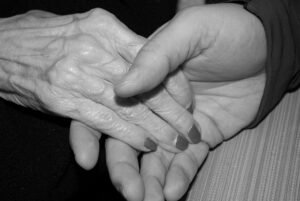
Finally, small comforts matter just as much as medical care. Playing familiar music, using a soft blanket, gentle hand massage, and speaking calmly can bring genuine reassurance, even when a person can no longer respond. These simple steps cost nothing but can make a real difference to comfort in the final days.
Frequently Asked Questions About Dementia and Dying (FAQ)
How long does the final stage of dementia usually last?
The final stage varies widely, lasting anywhere from a few weeks to over a year. Because dementia is a progressive disease, decline tends to speed up towards the very end.
What is usually the first sign that a person with dementia is dying?
A noticeable drop in eating and drinking is often the earliest sign, followed by increased sleep and reduced interest in surroundings.
Can a person with dementia feel pain if they can no longer speak?
Yes, pain can still be present even when someone cannot describe it. Carers and nurses watch for signs such as grimacing, tension, or restlessness, and pain relief can be given through patches, injections, or a syringe driver.
Is dementia officially classed as a terminal illness?
Yes. The NHS and UK hospice charities recognise dementia as a terminal, life limiting condition, which means people with advanced dementia can access hospice and end of life support.
Conclusion: Facing Dementia and Dying as a Progressive Disease
Dementia and dying are deeply connected, because dementia is, in the end, a progressive disease that gradually affects the whole body. Recognising the signs of decline allows families to shift their focus from searching for a cure to offering comfort, dignity, and companionship. With support from the NHS, Marie Curie, Dementia UK, and the Alzheimer’s Society, no family needs to face this journey alone. Simple, low cost steps, paired with professional guidance, can help your loved one’s final days feel peaceful rather than frightening.
“Get trusted advice on dementia care at home and practical tips for caring for someone with dementia at home—all in one place.”