

Quick summary: The main signs death is near in dementia include long periods of sleep, little interest in food or drink, cold or mottled skin, and irregular breathing with pauses. These signs usually appear together in the final days or weeks, and none of them are painful on their own. Simple comfort measures, such as gentle repositioning, oral (mouth) care, and a calm environment, can ease this stage for both the person and the family around them.
Watching for signs that death is near is one of the most unsettling parts of caring for someone with dementia. You may find yourself asking whether today is different, or whether a change is just another dip in a long illness. This guide walks through the ten signs families notice most often, so you feel steadier and better able to support your loved one through the final days.
The 10 Signs Death Is Near in Dementia

Every person’s decline looks a little different. Even so, these ten signs commonly appear together as the body approaches its final days.
1. Withdrawing from the world around them
The person may stop responding to visitors, television, or conversation. Their eyes may stay closed for long periods, even while resting rather than sleeping. This withdrawal is a natural part of the body conserving its remaining energy.
2. Eating and drinking very little, or not at all
Appetite often fades almost completely in the final days. Forcing food or drink at this point can cause discomfort, so small sponge swabs of water for the mouth are usually kinder than trying to feed the person.
3. Long periods of sleep or unresponsiveness
Many people slip into a deep sleep that becomes harder to interrupt as the days pass. This is not the same as being in pain, though it can be distressing for families to witness.
4. Cold, mottled hands and feet
As circulation slows, blood moves away from the arms and legs toward the vital organs. The skin can look blotchy, greyish, or bluish, and the hands and feet often feel cool to the touch.
5. Irregular or noisy breathing
Breathing often changes shape in the final days, with pauses followed by faster breaths. A soft, rattling sound can also develop, caused by fluid at the back of the throat that the person can no longer clear. This sounds worse than it feels, and it is rarely uncomfortable for the person.
6. A drop in urine output
As the kidneys slow down, urine output usually reduces and can darken in colour. This is a normal part of the body’s systems gradually shutting down, rather than a sign of pain.
7. Restlessness or agitation
Some people become unsettled rather than calm in the final days, picking at bedsheets or seeming distressed. This is sometimes called terminal restlessness, and a GP or hospice nurse can usually ease it with the right medication.
8. Changes in blood pressure and pulse
Blood pressure often drops, and the pulse can become fast, weak, or irregular. Families do not need to monitor this themselves, but a nurse checking in can use it to understand roughly how close the end may be.
9. Frequent infections that do not fully clear
A weakened immune system means infections such as chest infections or urinary tract infections become more common and harder to treat. Repeated infections in a short space of time are often a sign the body is struggling to recover.
10. A brief return of alertness
Rarely, a person who has been unresponsive for days suddenly becomes clear and talkative for a short time. This is sometimes called terminal lucidity. It is not fully understood, but many hospice staff see it as one of the body’s final acts before death.
Other Signs Death Is Near in Dementia
- A few less common signs are also worth knowing. The eyes may become glassy or slightly open even during sleep, and the face can look more relaxed or sunken as muscles lose tone. Some people develop a slight fever in the final hours, caused by the body’s temperature regulation slowing down.
- Changes in bowel patterns are also common in this final stage. Bowel movements usually slow down as the body’s systems begin to shut down. Constipation and reduced bowel movements are common, caused by lower food and fluid intake, and certain medications. Some carers also report noticing a change in stool colour (green) or consistency in the final days.
This is not something formally recognised in medical literature, but it is a pattern some families describe, so it is worth mentioning to a nurse if you notice it.Incontinence often increases at this stage too, so fit pads a little loose rather than tight, since tight pads can rub and cause soreness on fragile skin. Placing two or three pads around the area can help absorb more and reduce mess between changes. Clean gently with baby wipes, then finish with warm water to soothe the skin and lower the risk of irritation.
None of these signs needs urgent treatment on their own, but it is always worth mentioning them to a nurse, so comfort care can be adjusted.
Signs Death Is Near in Dementia-Bringing Comfort in the Final Days
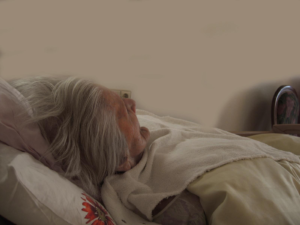
Small, gentle actions often matter more than any equipment at this stage.
- Keep a favourite scent nearby, such as a familiar hand cream, since smell can still bring comfort even when other senses fade.
- Place a family photo or object where the person can see it, in case moments of awareness return.
- Gently reposition the person every few hours to prevent soreness, using pillows for support under their back and knees. To minimise discomfort during the repositioning, use the bedsheet to assist with rolling.
- Keep the room warm with soft blankets, since cold hands and feet do not always mean the person feels cold themselves.
- Speak in a calm, familiar voice and avoid discussing difficult topics near the bedside, since hearing often remains until the very end.
Signs Death Is Near in Dementia-Getting Support Wherever You Live
Nobody should have to recognise these signs alone. A doctor, hospice nurse, or dementia charity can guide you through what comes next, wherever you are based.
– United Kingdom: Dementia UK’s Admiral Nurse Dementia Helpline is free on 0800 888 6678. Marie Curie’s support line is free on 0800 090 2309.
– United States: The Alzheimer’s Association 24/7 Helpline is free on 800.272.3900, with interpreter support in more than 200 languages.
– Canada: The Alzheimer Society of Canada’s referral service can be reached on 1-855-705-4636, Monday to Friday.
– Australia: Dementia Australia’s National Dementia Helpline runs 24 hours a day on 1800 100 500.
– Elsewhere: Alzheimer’s Disease International lists member associations in over 100 countries, so it is worth checking if your country is not named here.

Signs Death Is Near in Dementia-Frequently Asked Questions
How long after these signs appear does death usually happen?
This varies a great deal between individuals. Some people show death signs for a few days, while others show them for one or two weeks. A hospice or palliative nurse can often give a rough estimate based on the specific combination of signs present.
Is the death rattle sound a sign of pain or distress?
No, the sound is caused by fluid at the back of the throat, not by discomfort. The person is usually not aware of it, even though it can be uncomfortable for family members to hear.
Can death signs ever reverse, or is the decline always final?
Occasionally a person stabilises for a short time, particularly if an infection is treated or fluids are adjusted. However, once several of these signs appear together in advanced dementia, they usually signal that the final stage has begun.
Should I still try to give food or medication at this stage?
Most palliative teams recommend focusing on comfort rather than nutrition once appetite has fully faded. Medication is often switched to a form that does not need swallowing, such as a patch or injection, so ask the GP or nurse about this change.
What should I do if I notice several of death signs at once?
Contact the GP, district nurse, or hospice team as soon as you can. They can visit to confirm what is happening and make sure pain relief and comfort measures are in place.
Is it common to feel guilt alongside grief at this stage?
Yes, this is very common and does not mean you have done anything wrong. Many carers feel a mix of sadness, exhaustion, and even relief that suffering may soon end. All of these feelings are a normal part of anticipatory grief.
How long can someone with dementia live without eating or drinking?
This varies widely between individuals. As a rough guide, a person may survive for a few weeks without food but usually only a few days without fluids. Hospice and palliative teams focus on comfort rather than trying to extend this time, since the body no longer processes food or water the way it once did. This is a very common signs death is near in dementia patients.
Can constipation cause distress or agitation in last stage dementia?
Yes, untreated constipation can cause real discomfort and can sometimes show up as agitation, restlessness, or a change in usual behaviour, since the person may not be able to explain what is wrong. Mentioning bowel changes to a nurse allows gentle treatment options to be considered alongside other comfort care.
Is bowel or bladder incontinence a sign that death is close?
Incontinence is very common in advanced dementia and can appear well before the final days, so on its own it is not a reliable sign that death is near. It becomes more significant when it appears alongside several other signs on this list, such as reduced eating, long sleep, and irregular breathing.
Conclusion
Recognising the 10 signs death is near in dementia will not make this stage easy, but it can help you feel steadier and more prepared. Withdrawal, reduced eating, cool skin, and changes in breathing often appear together as the body’s final days unfold. Comfort, warmth, and a familiar voice matter more than any equipment. Reach out to a doctor, hospice team, or dementia helpline in your country for support through this final stretch.
“Get trusted advice on dementia care at home and practical tips for looking after someone with dementia at home—all in one place.”