

Primary Progressive Aphasia Life Expectancy Explained
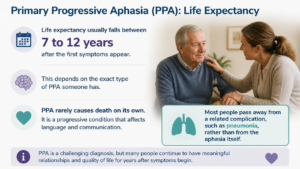
Summary: Primary progressive aphasia life expectancy usually falls between seven and twelve years after the first symptoms appear. This depends on the exact type someone has. The condition rarely causes death on its own. Most people pass away from a related complication, such as pneumonia, rather than from the aphasia itself.
Hearing a diagnosis of primary progressive aphasia can feel overwhelming. Naturally, one of the first things families want to know is how long their loved one has left. This guide walks through primary progressive aphasia life expectancy in plain terms. It also covers what daily life looks like at each stage, and practical, low cost ways to help.
Written and medically reviewed by our clinical content team, this article draws on peer reviewed research and guidance from trusted health organisations, including the NHS, the Alzheimer’s Society, and Mayo Clinic. It was last reviewed in August 2026.
What primary progressive aphasia actually is
Primary progressive aphasia, often called PPA, is an uncommon form of dementia. Rather than starting with memory loss, it begins by slowly affecting language. Someone might struggle to find the right word, or find it harder to follow a conversation.
For example, a person might pause mid sentence searching for the word kettle. At first, these moments can seem like ordinary slips, but they tend to happen more often over time.
Over time, PPA tends to spread beyond language. Many people eventually develop wider dementia symptoms too, such as memory changes or difficulty planning daily tasks. Because it develops so gradually, PPA is often mistaken for stress or normal ageing in the early months. Families sometimes describe noticing that a loved one repeats questions, or struggles to follow the plot of a television programme they once enjoyed easily.
There are three recognised types of aphasia. Each one affects communication differently, and each tends to move at its own pace. This matters greatly when trying to understand primary progressive aphasia life expectancy for a specific person, since averages can hide a wide range of outcomes.
Early signs families often notice first
Recognising PPA early helps with planning and support. Families often notice small, specific moments before any formal diagnosis is made.
- A parent who once wrote long emails suddenly sends short, simple messages instead.
- Someone struggles to name familiar objects, such as calling a watch a time thing.
- A person avoids phone calls, since following conversation without visual clues feels harder.
- A once chatty relative becomes quieter in groups, since keeping up feels exhausting.
If several of these signs appear together and continue for months, it is worth asking a GP for a referral to a memory clinic or neurologist. Early diagnosis often means earlier access to speech and language therapy, which can meaningfully support someone for longer.
How aphasia and frontotemporal dementia life expectancy connect
Most cases of primary progressive aphasia sit under a wider condition called frontotemporal dementia, often shortened to FTD. This link matters, since it helps explain the numbers doctors often quote. Research into frontotemporal dementia life expectancy generally points to a range of seven to thirteen years after symptoms first begin. Some studies place the average closer to eight or nine years, while others suggest longer survival for milder forms. As with PPA on its own, the exact outlook depends on which type of FTD someone has, along with their general health and age.
Understanding this wider picture can help families make sense of the figures they read, since aphasia and frontotemporal dementia life expectancy are closely linked rather than two separate stories.
How primary progressive aphasia life expectancy varies by type
Since PPA is rare, research into survival is still developing. That said, a handful of well conducted studies give families a realistic picture to work from.
One retrospective study followed 83 people diagnosed with PPA. On average, survival from the first symptom was around seven and a half years for two of the three types, and closer to twelve years for the third. A broader review of the evidence puts the typical range even wider, from as little as three years to as long as seventeen years.
These numbers are useful, but they are only a starting point. Every person’s journey with PPA looks a little different. Age, general health, and how quickly symptoms progress all play a part.
Primary progressive aphasia life expectancy for each subtype
Non fluent type. Speech becomes effortful early on. A person might speak in short, broken phrases, such as saying want tea instead of a full sentence. Survival tends to average around seven years from the first symptoms.
Logopenic type. Often linked closely to Alzheimer’s disease. Someone with this type may pause frequently while searching for words, and struggle to repeat longer phrases back accurately. Survival is broadly similar to the non fluent type, typically seven to eight years.
Semantic type. Usually the slowest to progress. A person may lose the meaning of everyday words, for instance no longer recognising what a dog is when shown a picture, even though speech itself still flows smoothly. Many people live for ten years or longer after their first symptoms appear.
Because the semantic type often moves more slowly, some people mistakenly assume it is milder. In practice, it eventually causes just as much difficulty. It simply takes longer to reach that point.
Knowing which subtype someone has can also guide planning. For instance, families supporting the non fluent type often invest early in picture based tools, since finding words becomes difficult quite soon after diagnosis.
Is primary progressive aphasia actually fatal?

This is a fair and common question, and the honest answer brings some reassurance. PPA itself does not usually cause death directly. Instead, the two most common causes of death in people with PPA are pneumonia and cardiac arrest.
Pneumonia often develops once swallowing becomes difficult, which tends to happen in the later stages. Food or drink can accidentally enter the airway instead of the stomach, leading to infection in the lungs. This is known as aspiration pneumonia, and it becomes more likely as PPA advances.
Knowing this helps families focus their attention wisely. Alongside communication support, keeping an eye on swallowing safety and general physical health can genuinely extend quality of life.
What happens in the later stages
As PPA progresses, spoken language becomes increasingly limited. In advanced cases, a person may speak only a handful of words, or stop speaking altogether. Understanding what others say also becomes harder, which can be frustrating and isolating for everyone involved.
Alongside communication changes, many people begin to need more help with everyday tasks. Memory and planning abilities often decline too, since PPA frequently develops into a wider dementia over time. Mobility can also become affected in the most advanced stage, meaning full time care is often needed.
For example, a person who once managed their own shopping list independently may eventually need help choosing and eating meals safely. A family carer might notice that mealtimes take longer, since chewing and swallowing become slower.
Thankfully, this decline usually unfolds slowly, over several years rather than weeks or months. That gradual pace gives families valuable time to plan ahead, learn new ways to communicate, and arrange support before a crisis hits. Many families find it helpful to start small changes early, such as introducing softer foods gradually, rather than waiting until a sudden change forces the decision.
Can primary progressive aphasia be treated or cured
There is currently no cure for aphasia, and no medicine that reverses or halts it. However, this does not mean nothing can be done. Several approaches can genuinely help someone live well for longer.
Speech and language therapy remains the single most useful treatment. A therapist can teach practical strategies, such as using pictures, gestures, or simple communication boards, so a person can still express their needs even when words become harder to find.
For example, a therapist might help someone build a personal phrase book, filled with photos of family members, favourite meals, and daily routines, so pointing replaces speaking when words will not come. For the logopenic type, which often overlaps with Alzheimer’s disease, doctors sometimes prescribe medications normally used for Alzheimer’s to help manage related symptoms.
Occupational therapy and physiotherapy can also support movement and independence for longer. An occupational therapist might suggest simple changes, such as clearer cupboard labels or a large print calendar, to help someone stay independent at home. Just as importantly, emotional support matters. Counselling, or medication for anxiety and low mood where needed, can make a real difference, since losing the ability to communicate easily is genuinely distressing.
Many people also find comfort in activities that do not rely heavily on words, such as gardening or listening to familiar music.
Practical, low cost ways to help someone with Aphasia
You don’t need expensive equipment to make a real difference. Small, thoughtful changes in home care often have the most impact.

Make a simple picture board. A laminated sheet showing common needs, such as water, food, pain, or toilet, can be made cheaply and reduces daily frustration for everyone. One family found that printing photos of actual meals, rather than generic icons, helped their father point confidently at what he wanted.
Keep routines predictable. A consistent daily rhythm means less needs to be communicated through speech, which eases pressure on both sides. For example, always serving breakfast at the same time and in the same seat removes the need to ask or explain what happens next.
Slow down and simplify. Speaking in short, clear sentences and asking one question at a time gives someone far more chance to respond comfortably. Instead of asking Do you want tea or coffee and a biscuit, try asking one question first, then wait patiently for an answer.
Ask for an early referral. Starting speech and language therapy soon after diagnosis, rather than waiting, tends to bring better long term results. A referral letter from a GP is usually free, and many services offer sessions at home or by video call.
Check swallowing regularly. A quick review from a GP or speech therapist every few months can catch early swallowing changes before they become risky. Simple signs to watch for include coughing during meals or taking much longer to finish a plate of food.
Join a support group. Free or low cost groups, run locally or online, connect families facing the same experience and reduce feelings of isolation. Many families say hearing practical tips from others facing the same situation feels more useful than reading alone.
Use everyday technology. A basic tablet or smartphone can display photos or play familiar music, often at little or no extra cost.
Write things down together. A shared notebook by the front door, noting the day’s plan, can reduce anxiety and repeated questions.
Small changes like these rarely cost much money, yet they noticeably ease daily frustration for everyone involved.
Final thoughts on primary progressive aphasia life expectancy
The condition itself rarely causes death directly. Instead, related complications such as pneumonia are usually responsible. With early speech therapy, thoughtful communication tools, and steady emotional support, many families find they can still enjoy meaningful time together for years after diagnosis.
FREQUENTLY ASKED QUESTIONS
What is the primary progressive aphasia life expectancy on average? Most research points to an average of seven to twelve years after the first symptoms appear, though some people live considerably longer, especially with the semantic type.
Does primary progressive aphasia always lead to dementia? Not always straight away, but most people with aphasia eventually develop broader dementia symptoms as the condition progresses beyond language.
What is the difference between PPA and aphasia after a stroke? Stroke related aphasia usually appears suddenly and may improve with therapy. PPA develops slowly over months or years and tends to gradually worsen instead.
What are the warning signs that aphasia is entering its final stage? Signs include very limited or absent speech, difficulty understanding others, reduced mobility, and swallowing problems that need close monitoring.
Can someone with aphasia still communicate in later stages? Yes, often through pictures, gestures, or simple communication tools, even once spoken words become very limited.
Is there any way to slow down primary progressive aphasia? There is no proven way to stop aphasia, but speech therapy and staying socially engaged may help someone manage symptoms for longer.
Should families consider palliative or hospice support? Many families find palliative support helpful in the later stages, particularly for managing swallowing difficulties, comfort, and emotional wellbeing.
Where can families find support after a aphasia diagnosis? Local dementia charities, speech and language therapy services, and online support groups all offer guidance and reduce the sense of isolation many families feel.
How is primary progressive aphasia diagnosed? Diagnosis usually involves a neurologist, a detailed language assessment from a speech therapist, and brain scans such as an MRI to rule out other causes.
At what age does primary progressive aphasia usually begin? Most people are diagnosed between their late fifties and mid seventies, though symptoms can occasionally appear earlier or later than this range.
Is primary progressive aphasia hereditary? In most cases, it is not directly inherited, though a small proportion of cases are linked to genetic changes, so a family history of dementia is worth mentioning to a doctor.
Can someone with aphasia continue driving? This depends on the individual and local rules. Many countries require the driving authority to be informed of a dementia diagnosis, and regular reviews are usually recommended.
How does aphasia affect a person emotionally? Many people feel frustrated or anxious as words become harder to find, since understanding often remains intact even when speaking does not. Patience and gentle reassurance from family help greatly.
What financial or legal steps should families consider early? Arranging power of attorney, reviewing wills, and speaking to a financial adviser soon after diagnosis can prevent added stress once communication becomes more difficult.
How can carers look after their own wellbeing? Regular breaks, joining a carer support group, and accepting help from friends or respite services all help prevent carer burnout over the long term.
Does diet or lifestyle affect how aphasia progresses? There is no proven diet that slows aphasia, but staying socially active, eating well, and managing other health conditions may support overall wellbeing.
Is primary progressive aphasia more common in men or women? Current research suggests PPA affects men and women in roughly similar numbers, unlike some other forms of dementia that show a stronger gender pattern.
“Get trusted advice on dementia care at home and practical tips for looking after someone with dementia at home—all in one place.”